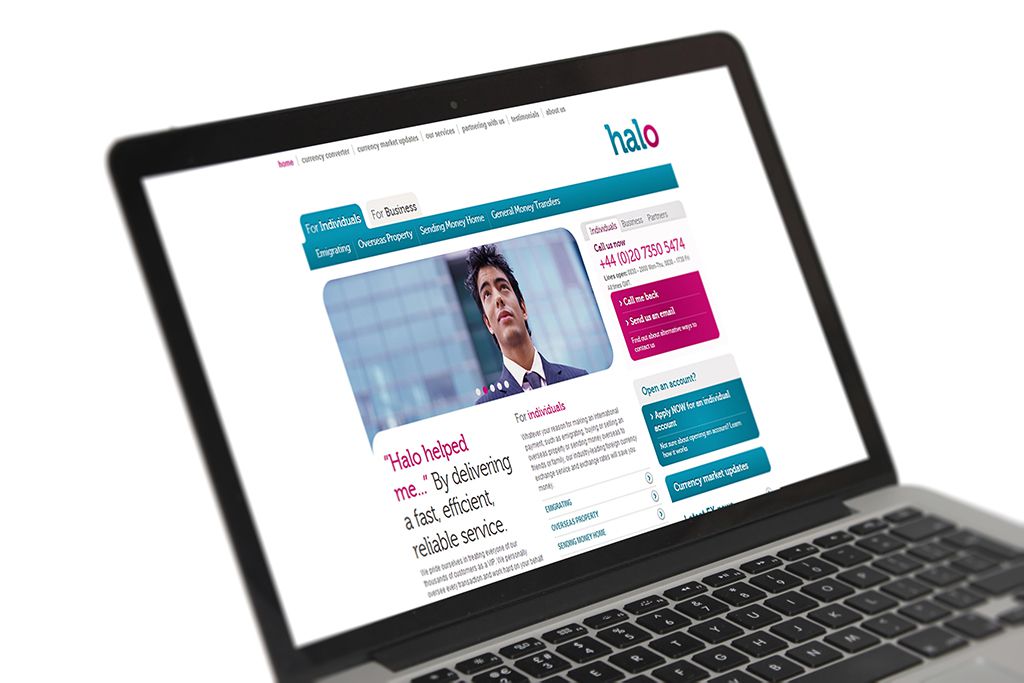
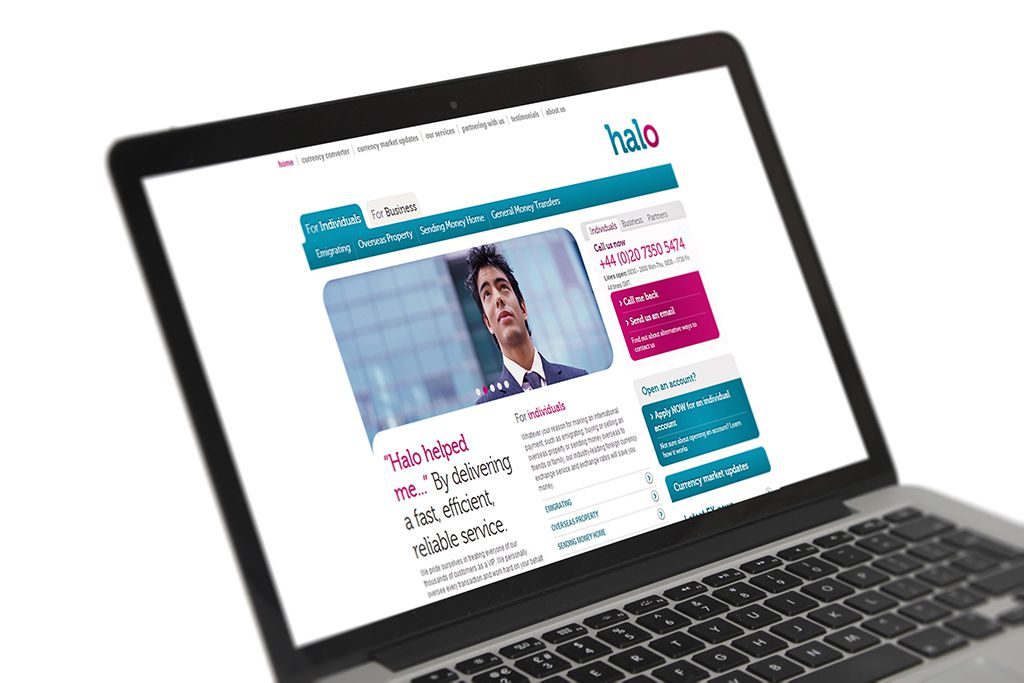
Halo Financial, a foreign exchange and international money transfer firm, was designing a new site and wanted the structure checked before the build rather than after it. I reviewed the wireframe information architecture and reported back, then ran a full usability review of the design candidates alongside the architecture, so the niggles were ironed out at an early stage. The relationship ran for nearly 10 years.
What was the problem?
Halo was designing a new site and needed the information architecture and the design candidates checked by someone outside the build, early enough for the findings to change something.
What did I do?
Consultancy on user experience
Information architecture consultancy
Usability testing on wireframes and screen designs
SEO consultancy
I reviewed the wireframe information architecture and provided a report back to the client, then conducted a full usability review of the design candidates along with the information architecture. Testing at wireframe stage is what allows a better user experience, because a few niggles get ironed out while they are still cheap to fix.
What was the result?
A set of usability and architecture problems found and fixed at wireframe and design stage rather than after build. The engagement itself is the other result: I have been working with Halo for nearly 10 years.
What does this show?
Usability testing is worth most before anything is built. A niggle found in a wireframe costs a conversation; the same niggle found after launch costs a development cycle and an argument about whose fault it is.
Why test wireframes rather than the finished design?
Because that is when a finding is still cheap. Reviewing the information architecture and the design candidates together, before build, means the niggles get ironed out at an early stage rather than becoming a development cycle after launch.
Not sure where to start?
Most clients begin with a conversation. No pitch, no hard sell.
Just a straightforward discussion about where you are and whether I can help.